
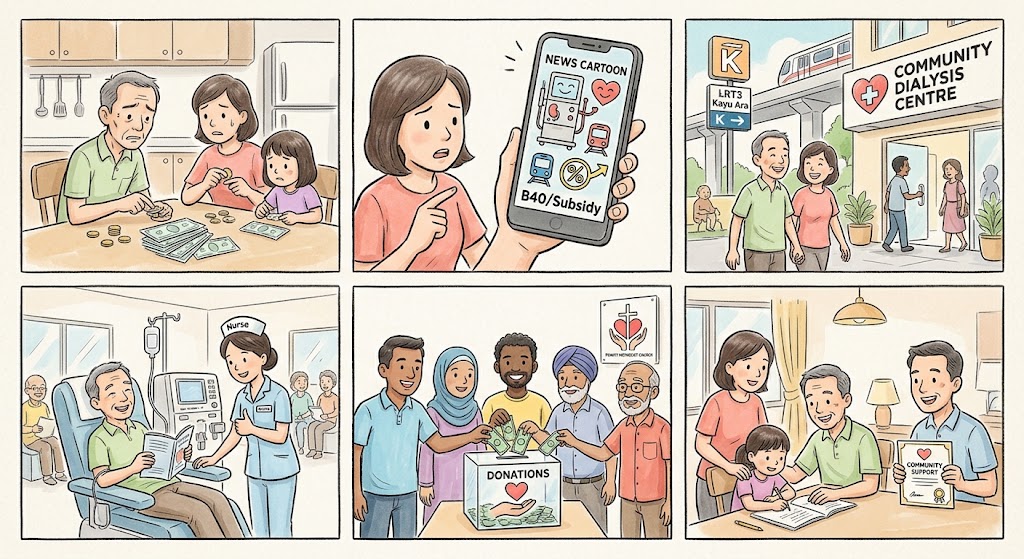
PETALING JAYA, October 2026 — When someone faces end-stage kidney failure, life changes overnight. Standard treatment requires four hours of dialysis, three times every week, for the rest of a patient's life.
Without help, the monthly cost of RM2,000 to RM3,000 quickly drains a family’s savings, turning a manageable illness into a financial crisis.
For low-income families in Malaysia, community-driven sanctuaries—from urban hubs in the Klang Valley like Persatuan Dialisis Kurnia Petaling Jaya (PDK) to centres serving outer towns and districts nationwide—step in as an essential lifeline.
A Growing Need Across Malaysia
Official data from the Malaysian Dialysis and Transplant Registry (MDTR) and Ministry of Health surveys show a steady rise in chronic kidney disease. Driven by high rates of diabetes, high blood pressure, and an aging population, the prevalence of kidney disease among Malaysians has climbed from 9.1% to 15.5%.
Experts estimate that up to 106,000 Malaysians may need lifelong dialysis treatment by 2040.
While public hospitals work tirelessly to care for patients, the sheer volume of cases means community-run centres are urgently needed across every state to fill the gap.
Breaking Financial Barriers for Families
At non-profit centres like PDK, financial background never stands between a patient and the care they need. While treatment costs can be overwhelming, centres charge government-approved subsidized rates and use community donations to cover remaining fees for needy B40 families who cannot pay.
Inside these facilities, patients receive care using modern dialysis machines, supported by trained renal nurses, visiting kidney specialists (nephrologists), and free health screenings. Beyond medical treatment, centres provide emotional counseling and spiritual support, ensuring patients feel cared for as whole individuals.
Better Access for Patients Everywhere
Location and travel expenses often pose significant hurdles for patients needing frequent care. In urban areas, the opening of public transit lines—such as the LRT3 with its Kayu Ara station situated just a short walk from PDK—makes getting to regular sessions safer, faster, and cheaper. Meanwhile, regional and rural community centres play an equally vital role in cutting down punishing travel times for families outside the major cities.
By combining affordable care, accessible transport, and steady donor support, community dialysis centres nationwide continue to offer hope, dignity, and a reliable lifeline to those who need it most.