
PETALING JAYA, October 2026 – Every single day, nearly 28 Malaysians hear the words no one wants to hear: their kidneys have failed completely (source Ministry of Health).
End-Stage Renal Disease (ESRD) has reached alarming levels across Malaysia, particularly hitting our low-income B40 communities. With dialysis units in public hospitals strained and patients from small warung towns to urban PPR flat complexes commuting multiple times a week for treatment, many still ask: how did this happen to my body?
Why Are Malaysian Kidneys Failing?
Medical data from local clinics and the Malaysian Dialysis and Transplant Registry identify four key drivers of kidney failure:
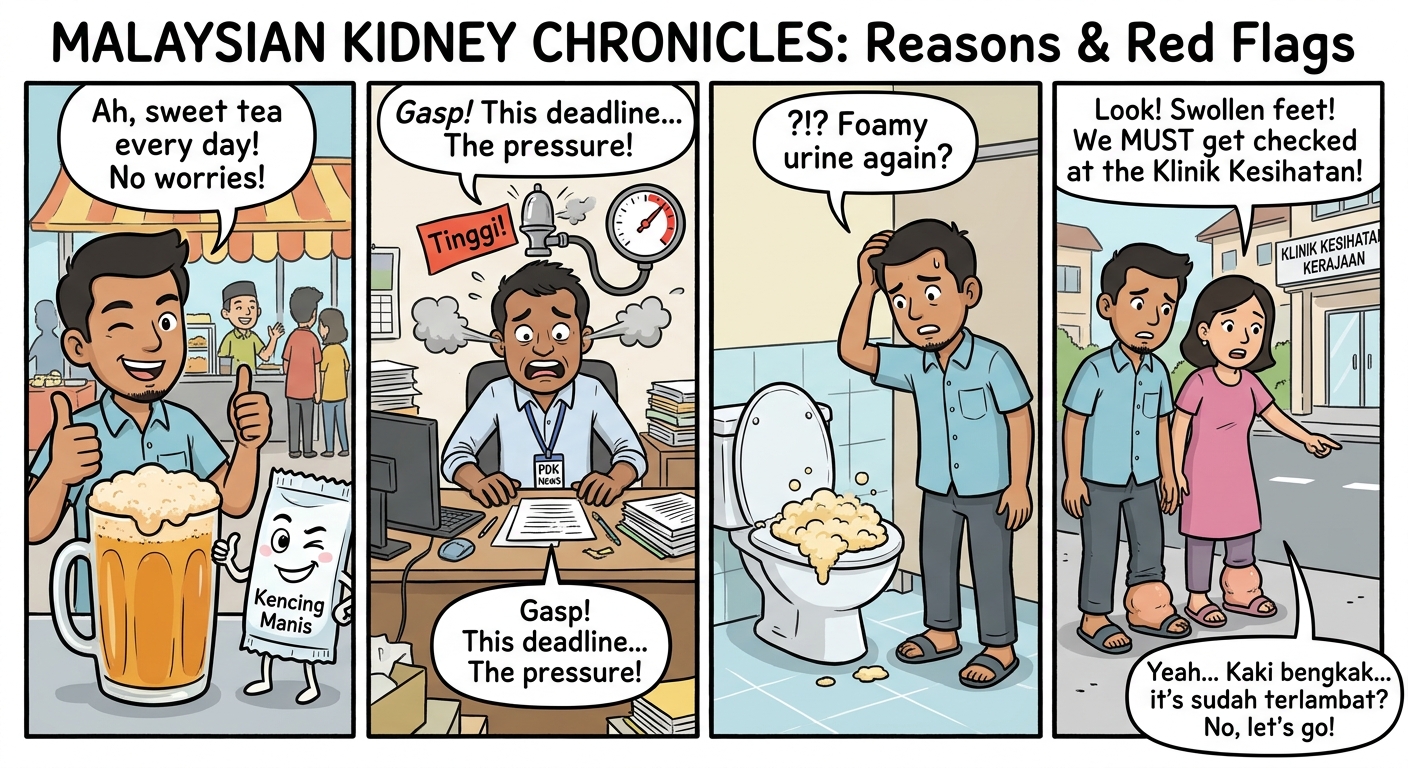
1. Uncontrolled 'Kencing Manis' (Diabetes): Over 60% of new dialysis patients end up in renal units due to diabetic kidney disease. Years of high blood sugar quietly destroy the tiny blood filters inside the organs.
2. High Blood Pressure ('Darah Tinggi'): About 30% of cases stem from unmanaged hypertension. Persistent high pressure damages renal blood vessels until they can no longer clear waste.
3. Painkillers & Unverified Supplements: Frequent reliance on non-prescription pain medications (ubat tahan sakit) for chronic joint or back pain, alongside unregistered herbal tonics or slimming pills, poisons renal tissue over time.
4. Polycystic Kidney Disease (PKD): While genetic causes account for a smaller percentage of cases overall, PKD—a inherited condition causing fluid-filled cysts to enlarge and destroy kidney structure—remains a persistent, non-preventable concern. Though less common than diabetes, doctors warn that because PKD runs in families, any individual with a family history of kidney disease must seek genetic screening early before cysts cause irreversible organ failure.
Red Flags: When to See a Nephrologist Immediately
Kidney disease is a "silent killer" because up to 80% of function can be lost without pain. However, your body sends subtle warning signs:
· Foamy Urine (Kencing Berbuih): Persistent bubbles that don't flush away easily indicate protein leaking into your urine.
· Unexplained Swelling (Kaki Bengkak): Puffiness around your ankles, legs, or eyes in the morning signals fluid buildup.
· Constant Extreme Fatigue: Chronic exhaustion paired with pale skin occurs when failing kidneys stop signaling red blood cell production.
· Changes in Urination: Waking up multiple times every night to pass urine, or peeing far less than usual.
· Metallic Taste or Nausea: Toxic waste building up in the blood (uremia) causes loss of appetite, morning nausea, or a metallic taste.
Take Action at Your Local Klinik Kesihatan
You do not need costly private hospital visits to safeguard your health.
If you are over 40, live with diabetes or high blood pressure, or have a family history of kidney issues (including PKD), visit your nearest Klinik Kesihatan. Basic urine and blood filtration tests cost very little under public health programs like Skim Perubatan MADANI or PeKa B40—and taking them early can save your life before it is sudah terlambat.
Source of article: Ministry of Health Malaysia (MOH) & Malaysian Society of Nephrology Data